
Opening or upgrading a restaurant involves many interconnected decisions, but kitchen equipment can have a particularly direct effect on daily operations. Cooking capacity, preparation speed, hygiene, energy requirements, staff movement, and maintenance all depend partly on how equipment is selected and integrated. Choosing the right Restaurant Kitchen Equipment Manufacturer should therefore involve a structured evaluation rather than relying only on quotations.
Restaurant owners in Chandigarh can reduce costly design changes by assessing the manufacturer against their menu, production volume, available space, and service requirements.
Does the Manufacturer Understand Your Menu?
Commercial kitchens should not be designed from a generic equipment checklist.
A North Indian restaurant, bakery, café, cloud kitchen, and multi-cuisine dining outlet may require very different preparation and cooking systems.
A capable manufacturer or kitchen solution provider should first understand:
- Menu categories
- Cooking techniques
- Peak order volume
- Number of kitchen employees
- Storage requirements
- Service format
- Available utilities
- Cleaning processes
These factors provide a practical basis for recommending equipment.
Evaluate Customization Capability
Standard equipment dimensions may not always fit the available kitchen area or workflow.
Customization can be useful for stainless steel tables, sinks, storage units, racks, counters, and other fabricated components. When evaluating a provider, ask whether equipment dimensions and configurations can be adapted where required.
Customization should solve operational problems rather than simply add decorative features.
Check Material and Fabrication Standards
Commercial equipment may face intensive daily use. Construction quality is therefore important.
Inspect material specifications, welding quality, edges, joints, stability, finishing, and accessibility for cleaning. Doors and drawers should operate smoothly, and work surfaces should feel suitably rigid for their intended purpose.
Buyers should request clear specifications rather than relying on appearance alone.
Ask How Equipment Fits the Overall Layout
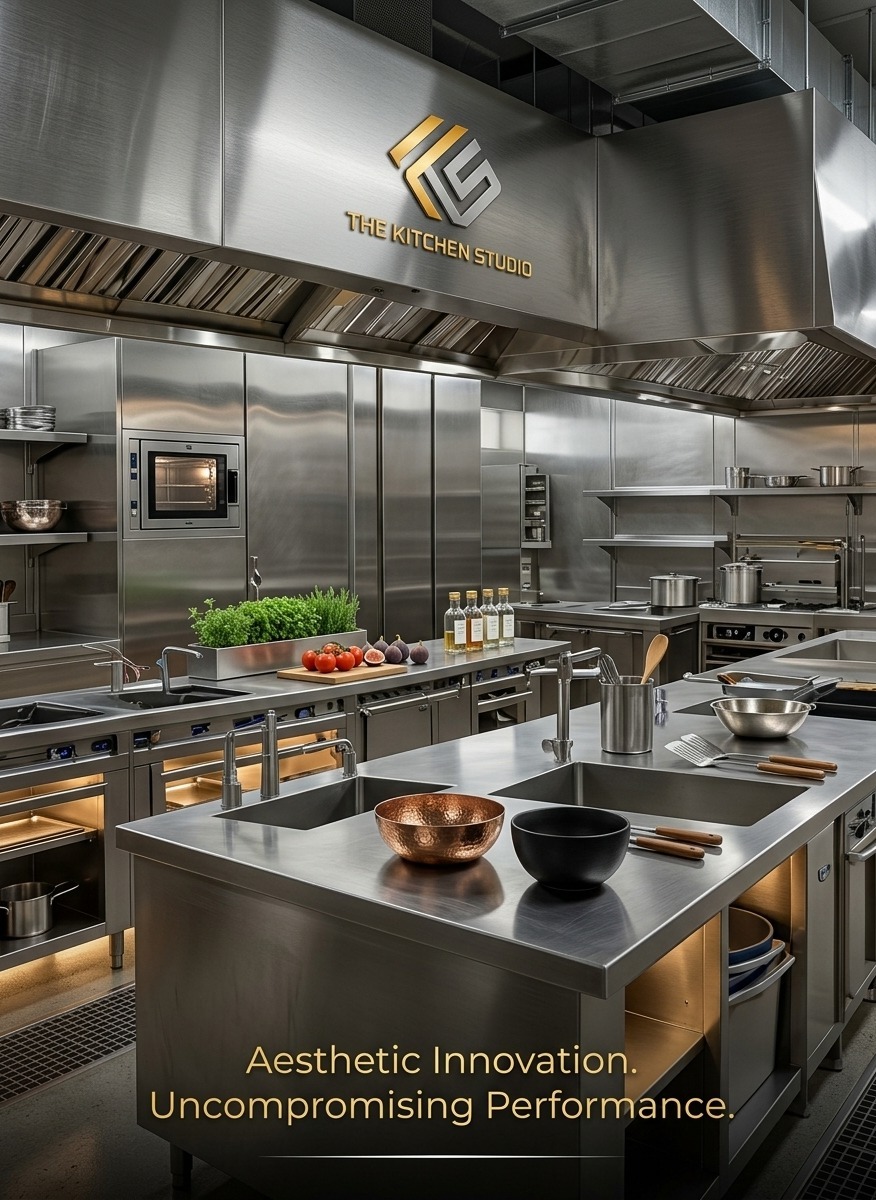
A reliable Restaurant Kitchen Equipment Manufacturer should understand that individual machines cannot be planned independently of the room.
Equipment positioning affects:
- Staff circulation
- Ventilation
- Gas connections
- Electrical points
- Water supply
- Drainage
- Food preparation flow
- Cleaning access
A poorly positioned cooking line can cause congestion even if every individual piece of equipment performs correctly.
Consider Maintenance Accessibility
Restaurant equipment will eventually require inspection, cleaning, adjustment, or component replacement.
Equipment should therefore be positioned so technicians and staff can access essential areas without dismantling major sections of the kitchen.
Before purchasing, ask about servicing requirements and availability of replacement components for relevant equipment.
Compare Quotations Carefully
The lowest quotation may not represent the lowest long-term cost.
Compare what each proposal actually includes. Differences in dimensions, material grade, thickness, accessories, fabrication, installation, warranty, and service can significantly affect pricing.
A useful comparison should place equivalent specifications side by side.
Look for Integrated Planning
Restaurant projects often work more smoothly when layout and equipment requirements are coordinated from the beginning.
The Kitchen Studio works with kitchen planning and equipment solutions for customers in Chandigarh, allowing restaurant operators to consider equipment in relation to workflow and available space rather than as isolated purchases.
Before choosing a provider, restaurant owners should have clarity about menu requirements, approximate production volume, site dimensions, utilities, and budget range. These readiness indicators make discussions more productive and quotations more meaningful.
Selecting the right manufacturer is ultimately about operational compatibility. Equipment should fit the menu, room, workforce, utilities, and maintenance requirements. When those factors align, the kitchen is better positioned to support consistent service rather than becoming an operational bottleneck.