A hotel buffet succeeds when its visual arrangement supports fast replenishment, clear guest movement, safe hot holding, and easy service rather than simply filling a row of chafing dishes. You will be able to plan layouts for different meal periods, calculate practical dish quantities, separate dietary choices, and specify presentation details that remain usable during a busy service.
Key takeaways
- Place plates first and design a one-way route through the buffet.
- Choose chafing dish capacity and shape according to each menu item.
- Use consistent labels, varied heights, and dedicated serving tools.
- Specify clearances, utilities, finishes, and cleaning access in the fabrication brief.
Build the Layout Around the Meal Period and Venue
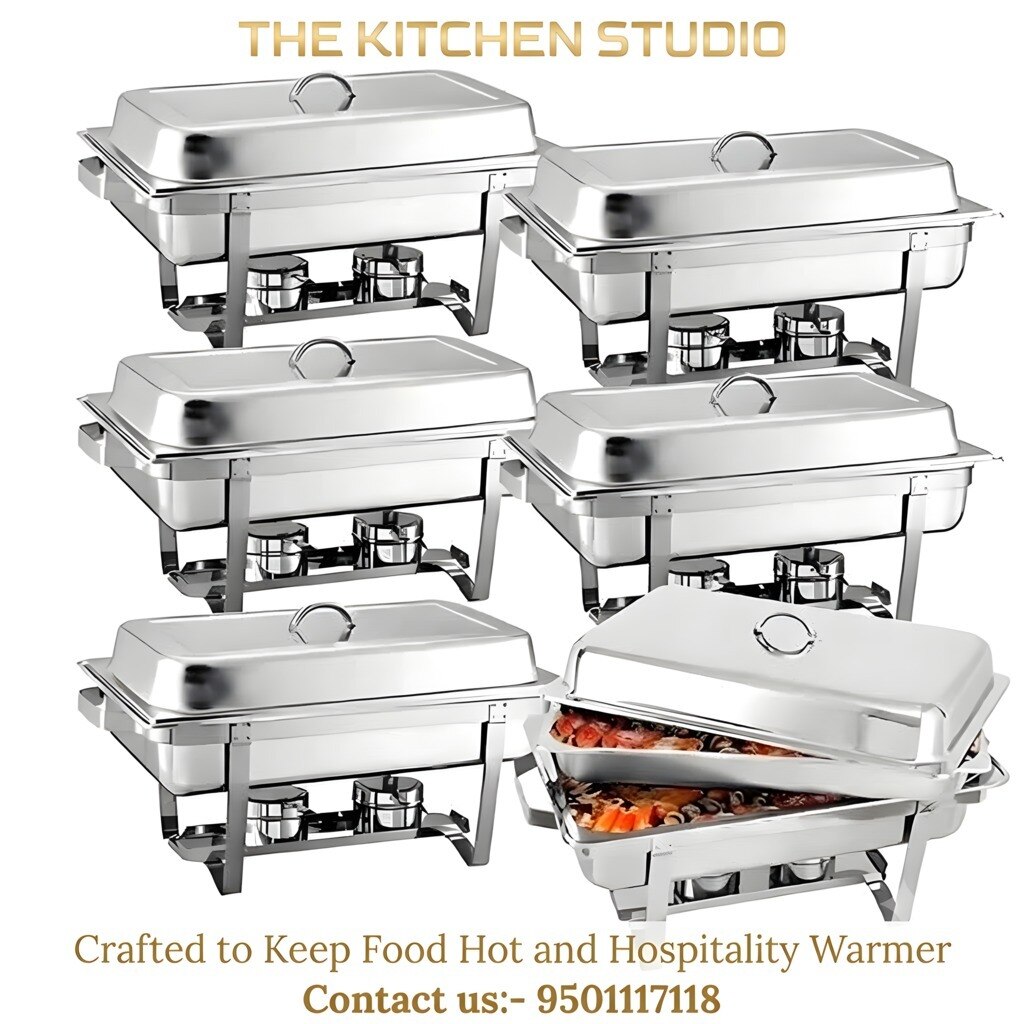
Place the premium stainless steel chafing dish buffet set where the room’s traffic supports the meal, not where the backdrop looks best. Keep plates at the entrance, leave clear space between hot dishes, and position the line so guests do not meet returning diners.
| Service | Arrangement | Chafing-dish decision |
|---|---|---|
| Breakfast | Put fruit, yoghurt, cereals, and pastries before hot food; place coffee away from the queue. | Use shallow dishes for eggs and potatoes, with duplicates for popular items. |
| Lunch | Start with salads and soup, then arrange mains, sides, bread, and sauces near the exit. | Duplicate the two fastest-selling mains rather than adding slow-moving choices. |
| Dinner | Build a calmer dinner buffet setup with mains centred, sides beside them, and sauces immediately after. | Use matching covered dishes and consistent spacing for a formal appearance. |
| Banquet or wedding | Create two identical lines when attendance is high, keeping desserts at a separate station. | Avoid a single central queue that blocks table service. |
| Outdoor service | Shield the line from wind, sun, and rain; secure lids and keep fuel access controlled. | Select stable stands and test lid handling before guests arrive. |
For public service, review the entire arrangement against local accessibility rules, including counter height and clear floor space. Choose 304 stainless steel for normal indoor use; consider 316 near salt air or brine, but clean either grade with nylon pads.
Hold hot food at 135°F (57°C) or above, and test condensation, lid rests, and utensil holders during service rehearsal.
Create One-Way Guest Flow From Plates to Dessert
Start with a single entrance and end with dessert, so the buffet station layout gives every guest the same route. A one-way buffet flow prevents people carrying hot plates back through the queue, while a separate drinks point keeps beverage traffic from blocking food service.
1. Place plates at the entrance, followed by cold starters, salads, and soups. Keep napkins and tableware out of the opening lane so guests do not stop before loading food.
2. Put the main chafing dishes after the cold courses, then arrange sides and sauces. Use matching pans, lids, risers, and fuel holders; an orderly chafing dish buffet arrangement gives guests clear sightlines and prevents lid parking from narrowing the serving space.
3. Place bread and cutlery near the end, then direct guests to a separate dessert table. This stops people choosing sweets while others are still serving mains.
4. Use duplicate popular dishes instead of adding a second crossing lane. Two identical stations for roast meat or rice often improve buffet queue management more than a wider menu.
5. Add removable utensil rests beside each dish, not across lids. Check reach, clear floor space, counter height, and fuel shielding for the complete arrangement under applicable accessibility and fire-safety rules.
Match Dish Quantity, Shape, and Capacity to the Menu
Start with one chafing dish for each hot menu item, then duplicate the two dishes guests will take most quickly. For example, six hot dishes for 80 guests may need eight units if rice and curry drive the queue; duplication prevents refilling delays better than adding a seventh side.
| Format | Best use | Capacity and service effect |
|---|---|---|
| Full-size rectangular | Rice, curry, pasta, vegetables, carved-meat sides | Holds more portions and suits high-demand items; check the pan’s actual chafing dish capacity before ordering |
| Half-size rectangular | Two low-volume sides or a small banquet menu | Uses less food and space; separate pans allow faster replacement |
| Round soup dish | Soup, dal, stew, or sauce | Deeper shape limits splashing and supports ladle service |
| Divided pan | Two compatible sides | Saves footprint, but avoid it when foods need different temperatures or utensils |
Match pan depth to the food, not the table design. Shallow pans present lasagne or baked pasta neatly, while deeper pans protect rice and curry from drying during a long service. Soup needs a round vessel with a stable ladle rest.
For rice, curry, soup and pasta chafing dishes, confirm pan dimensions, water-pan depth, heat-source clearance, and replacement-pan availability as one system. A full pan must slide in and out without tipping the stand, and every hot item needs enough capacity to avoid topping up with lukewarm food.
Use Labels, Heights, and Serving Tools to Make Choices Clear
Place the label before the dish, not behind it. A guest should identify the dish, dietary group, and key allergen information without lifting a lid or leaning across the buffet.
- Mark a vegetarian buffet with a clear “Vegetarian” label and use a separate utensil.
- Print vegan buffet labels with the word “Vegan” in large type; do not rely on a leaf icon alone.
- Identify a halal buffet with a visible “Halal” label and keep its serving tool separate.
- Give an allergen-free buffet station its own sign, utensils, and defined boundary; name the excluded allergen rather than promising that every food is safe.
- Add the dish name and one short clarification, such as “contains dairy” or “contains nuts,” instead of a paragraph guests will not read.
Use a coordinated chafing system so pans, covers, handles, fuel holders, and risers align. Mixed depths create broken sightlines, while incompatible lids can drip onto labels or leave hot surfaces exposed. Test each lid’s opening angle, handle temperature, condensation path, and resting position with hot food.
Raise rear dishes only enough to improve visibility. Excessive tiers force short guests to reach, make staff replenishment awkward, and reduce heat clearance. Check the finished display at the actual guest reach range and verify that every serving utensil rests beside its dish, not across a neighbouring pan.
Protect Food Safety Without Sacrificing Presentation
Set a 60°C hot holding target for cooked buffet food, giving staff a practical margin above the 57°C minimum in the FDA Food Code. Check the centre of each pan with a sanitised probe thermometer buffet routine at the intervals written into your HACCP hotel buffet plan; record the reading, time, dish, and corrective action.
Keep the water pan filled to the marked level before lighting fuel. It moderates heat but cannot rescue an empty pan, an undersized flame, or a cold food load. Use matching fuel holders with stable bases, keep flames below the pan, and position linens, paper labels, and serving handles away from the heat.
Assign one trained attendant to inspect fuel-operated dishes during service. The attendant should:
- Replace a canister only after extinguishing and cooling the holder; never pour fuel into a lit or hot container.
- Remove a dish from service if the flame is unstable, the holder is damaged, or the pan falls below the safe holding temperature.
- Keep lids on between servings and park them on the defined rest, not on the table or linen.
- Clean and sanitise the thermometer between dishes to prevent cross-contact.
Choose induction when precise control matters, but specify compatible magnetic pans, protected cables, ventilation clearance, and a power-loss plan. Conceal equipment without creating a trip hazard.
Turn the Display Plan Into a Service-Ready Fabrication Brief
Give the fabricator a drawing, not “a premium buffet.” Mark the commercial buffet counter’s length, service side, rear clearance, queue direction, fuel or electrical zones, and cleaning access. Show each 304 stainless steel chafing dish by pan footprint, lid swing, fuel-canister clearance, and maximum filled weight.
Standard pan dimensions let staff replace a depleted pan without dismantling the display.
- Specify 304 stainless steel for normal indoor service; choose 316 where coastal air, brine, or salt-heavy cleaning creates substantial chloride exposure.
- Dimension buffet risers and drip trays around the actual dishes, with braced feet, anti-slip contact points, and enough heat clearance.
- Request removable utensil rests or clipped holders sized for the spoons, tongs, and ladles staff will use.
- Review the finished arrangement against ADA Standards and local rules for serving-counter height, reach, and clear floor space; a standard chafing stand is not automatically accessible.
- State weld finish, rounded corners, sealed joints, adjustable feet, and access panels for cleaning and maintenance.
The Kitchen Studio can turn this brief into stainless steel buffet fabrication only after checking the fully loaded display, not an empty mock-up. Reject any layout that forces guests or staff to reach across hot dishes, traps spills beneath fixed parts, or requires carbon-steel wool that can leave rust-colored iron contamination.
Frequently asked questions
How should you arrange a hotel buffet for smooth guest movement?
Put plates at the entrance, arrange stations in meal order, leave clear space between hot dishes, and keep returning diners away from incoming guests.
How many chafing dishes does a buffet need?
Choose the quantity from the menu, expected demand, replenishment schedule, and available counter space rather than filling the line with identical dishes.
What makes buffet labels and serving tools easy to use?
Use large, consistent labels beside each dish, vary equipment height carefully, and provide a dedicated utensil that matches every food item.
How can a buffet protect food safety while staying attractive?
Maintain hot food at 63°C or above, monitor it with a calibrated thermometer, protect food from contact, and plan safe replenishment and cleaning access.