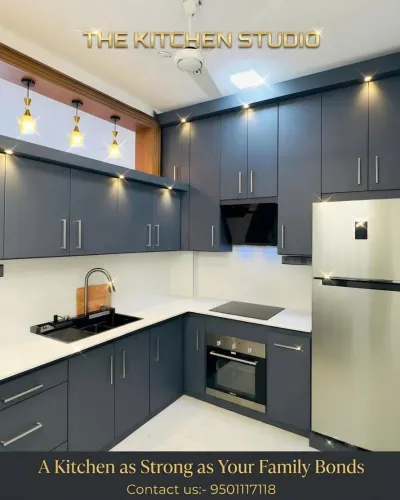

A kitchen can look immaculate at handover and still fail early because the alloy, sheet thickness, welds, drainage and cleaning regime do not match the working environment. By the end, you will be able to specify materials by zone, compare 201, 304, 316 and 430 intelligently, and inspect a quotation for evidence of lasting quality.
Key takeaways
- Use 304 stainless steel in wet and food-contact kitchen zones.
- Reserve 201 stainless steel for dry exteriors and enclosed panels.
- Check support frames, welds and load capacity—not sheet gauge alone.
- Control chemicals and standing water to prevent stainless steel corrosion.
Choose the Stainless Steel Grade by Kitchen Zone
Use 304 stainless steel for most wet worktops, sink bowls, splashbacks and food-contact surfaces. Reserve 201 stainless steel for dry cabinet exteriors and enclosed panels, where lower corrosion exposure makes its cost advantage reasonable.
| Grade | Best fit | Avoid or limitation |
|---|---|---|
| 201 stainless steel | Dry cabinet bodies, doors and interior panels | Not suitable for sinks, wet benches, salt stations or persistent condensation |
| 304 stainless steel | Worktops, sinks, splash zones and general food-service fabrication | Chlorides, brine and coastal exposure can cause pitting |
| 316 stainless steel | Salt-handling stations, coastal kitchens, dishwashing areas and chemical-exposure zones | Costs more and still requires rinsing, drying and controlled chemical use |
| 430 stainless steel | Dry interior cladding and decorative panels | Lower resistance to chloride and crevice corrosion; avoid wet work areas |
For 316 stainless steel kitchens, specify the grade where salt, brine or frequent chemical contact creates a credible pitting risk, rather than upgrading every panel. Type 304 contains about 18–20% chromium and 8–10.5% nickel; 316 adds roughly 2–3% molybdenum, improving chloride resistance.
No grade makes stainless steel immune to bleach, hypochlorite, hydrochloric acid or concentrated cleaner left to dry. Require dilution, contact time, rinsing and drying instructions, plus smooth welds and open, drainable joints. A correct grade cannot rescue trapped residue, heat-tinted welds or poor fabrication.
Look Beyond Sheet Gauge to the Load-Bearing Structure
A thick worktop can still flex if its underside is unsupported, while a thinner panel with sound reinforcement can remain rigid. Stainless steel thickness is only one part of the load path: the top must transfer weight into the frame, legs and floor without bending or twisting.
| Sheet gauge | Approximate thickness | Structural implication |
|---|---|---|
| 14 gauge | 0.075 in | Greater panel stiffness, but not proof of adequate support |
| 16 gauge | 0.060 in | Suitable only when bends, returns and reinforcement control deflection |
| 18 gauge | 0.048 in | Needs stronger understructure where equipment or stored goods add weight |
Ask the fabricator to show how the design handles:
- Reinforcement beneath worktops, shelves and sink cut-outs; unsupported spans sag and pull welded joints apart.
- Frame construction, including welded corners, cross-members and sealed or open sections; a decorative skin cannot replace a load-bearing frame.
- Leg spacing and adjustable feet; widely spaced or poorly braced legs let a unit rack when staff push it or equipment vibrates.
- Rated load capacity for each shelf, worktop and equipment stand, with the load distributed as it will be during service.
Check the rating against full pans, appliances, stored ingredients and cleaning impact rather than an empty-unit demonstration. A stable unit keeps doors aligned, drains at the intended slope and welds under less fatigue. If the supplier cannot explain the load path or provide a tested capacity, treat the gauge number as incomplete evidence.
Match the Finish and Design Details to Cleaning and Heat
A bright surface is not automatically durable or hygienic. Choose the finish for the cleaning method, visibility of soil and likelihood of scratching, then design every joint so food residue and wash water have nowhere to collect.
| Finish | Cleaning and heat behaviour | Best fit |
|---|---|---|
| No. 4 brushed finish | Hides light scratches, but directional grain can retain soil if it is deep or poorly finished | Cabinet fronts and general work surfaces |
| Polished stainless steel | Easier to inspect for residue, but shows scratches, fingerprints and heat marks quickly | Areas needing frequent visual inspection |
| Patterned finish | Adds texture and can disguise wear, but deep patterns are harder to scrub and sanitise | Use only when its cleanability is proven |
Heat resistance versus corrosion resistance is a design decision, not one performance label. Repeated heating and cooling can expand panels, loosen poorly supported joints and stress welds. Keep hot equipment away from sealed gaskets, plastic fittings and thin unsupported panels; provide clearance where heat can transfer into adjacent surfaces.
Welds need more than a neat appearance. Remove heat tint and oxide scale using a suitable process, then passivate where specified under ASTM A967; ASTM A380 covers cleaning and descaling practice. Use continuous, smooth welds, radiused internal corners, sealed hollow sections, sloped surfaces and accessible legs.
These details prevent grease, chloride-rich water and cleaner from sitting in crevices, where pitting, galvanic attack and odour-producing contamination can begin. Rinse and dry bleach or hydrochloric-acid residues instead of letting them evaporate on the metal.
Verify Material Quality Before You Sign Off the Fabrication
Do not approve a stainless-steel fabrication from its shine alone. Ask for a mill test certificate for each specified grade; it should show the heat number, chemical composition and applicable material standard. Match that heat number to the supplier’s invoice, material schedule and any grade marking stamped on the sheet or attached to the component.
Use this sign-off sequence:
- Compare the certificate and grade marking with the specification for every cabinet, worktop, sink and splash-zone component.
- Request positive material identification when the marking is missing, mixed or doubtful. Handheld X-ray fluorescence can distinguish many stainless grades, but it does not prove thickness, weld quality, surface roughness or passivation.
- Complete a weld quality inspection. Reject welds with cracks, pits, undercut, spatter, incomplete fusion, sharp crevices or unremoved heat tint. Obtain records showing cleaning, descaling and passivation where specified; ASTM A380 covers cleaning and passivation practice, while ASTM A967 covers chemical passivation treatments.
- Check the finished surface with the specified finish and roughness requirement, not a visual gloss test. Inspect corners, folded edges, seams and cut-outs for burrs and soil-trapping laps.
- Turn the unit over. Confirm sealed or continuously welded joints where required, drainable tubular frames, sound reinforcement, sealed feet and no open hollow sections that can collect water.
The Kitchen Studio can support a better handover by providing these records alongside measured drawings and inspection notes. Sign only after the documents identify what arrived and the underside matches the approved construction.
Related products
 | Modern Stainless Steel Modular Kitchen Modern Stainless Steel Modular Kitchen The modern stainless steel modular kitchen is designed to combine contemporary aesthetics with superior durability and hygiene. View product → |
 | Stainless Steel Kitchen The residential stainless steel modular kitchen is thoughtfully designed to meet the needs of contemporary homes. View product → |
Prevent Corrosion Through Chemical Control and Better Drainage
A concentrated cleaner left to dry can pit stainless steel, especially under a gasket, fastener or appliance foot. Chlorine bleach and stainless steel are a risky combination when hypochlorite solution sits on the surface; hydrochloric acid and chloride-rich cleaners are worse.
Undiluted caustic soda can damage finishes and seals, particularly when hot, so follow the chemical supplier’s stated dilution and contact time.
| Failure source | What goes wrong | Preventive control |
|---|---|---|
| Bleach, acid or salt residue | Pitting and staining develop as chlorides concentrate | Specify dilution, contact time, rinsing and drying; never let chemicals dry |
| Mixed-metal wet joint | Galvanic corrosion attacks the less noble metal, especially carbon steel | Use compatible fasteners, isolating washers, coatings and a drainable joint |
| Lap joint or sealed tube | Crevice corrosion starts where oxygen-poor water and food debris remain trapped | Use continuous hygienic welds, sealed edges, sloped surfaces and open or drainable frames |
| Weld heat tint | Oxide scale leaves a locally less corrosion-resistant surface | Remove the tint correctly, then passivate where specified; ASTM A380 covers cleaning and ASTM A967 covers passivation |
- Keep worktops and shelves sloped toward a drain instead of allowing standing water.
- Seal countertop-to-wall and sink joints with an appropriate, maintainable sealant; do not hide an inaccessible void.
- Raise equipment on cleanable legs, inspect beneath it, and remove wet food debris during every cleaning shift.
- Rinse chemical residue with clean water and dry the surface. A 316 grade reduces chloride risk but does not make stainless steel immune to bleach or standing saltwater.
Frequently asked questions
Which stainless steel grade suits each kitchen zone?
Use 304 stainless steel for wet worktops, sink bowls, splashbacks and food-contact surfaces. Use 201 for dry cabinet exteriors and enclosed panels with limited corrosion exposure.
Why does sheet gauge not determine kitchen durability?
A durable kitchen also needs adequate support frames, reinforced worktops, sound welds and load-bearing structures. A thicker sheet cannot compensate for weak construction.
How should you choose a stainless steel finish?
Match the finish and design details to cleaning demands, heat exposure and contact points. Select surfaces that are easy to clean and avoid details that trap grease or water.
What should you verify before approving stainless steel fabrication?
Inspect the specified grade, sheet thickness, dimensions, weld quality, edges, supports, doors, joints and drainage before signing off the fabrication.
How can you prevent corrosion in a stainless steel kitchen?
Control exposure to harsh chemicals, remove standing water and provide effective drainage. Prevent contact with incompatible metals and clean chemical residues from surfaces.
Related products
 | Residential Stainless Steel Modular Kitchen Residential Stainless Steel Modular Kitchen The residential stainless steel modular kitchen is thoughtfully designed to meet the needs of contemporary homes. View product → |
 | Stainless Steel Work Table The stainless steel work table is designed to meet the demanding needs of commercial and professional kitchens. View product → |
 | SS Modular Kitchen The residential stainless steel modular kitchen is thoughtfully designed to meet the needs of contemporary homes. View product → |
 | Stainless Steel Work Table With Over Shelf Stainless Steel Work Table With Over Shelf The stainless steel work table with over shelf is designed to enhance efficiency and organization in commercial and professional kitchens. View product → |