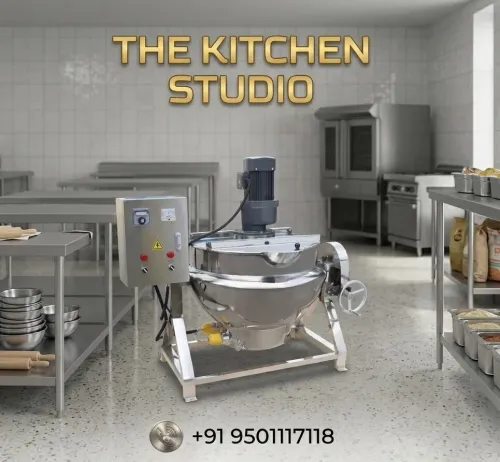
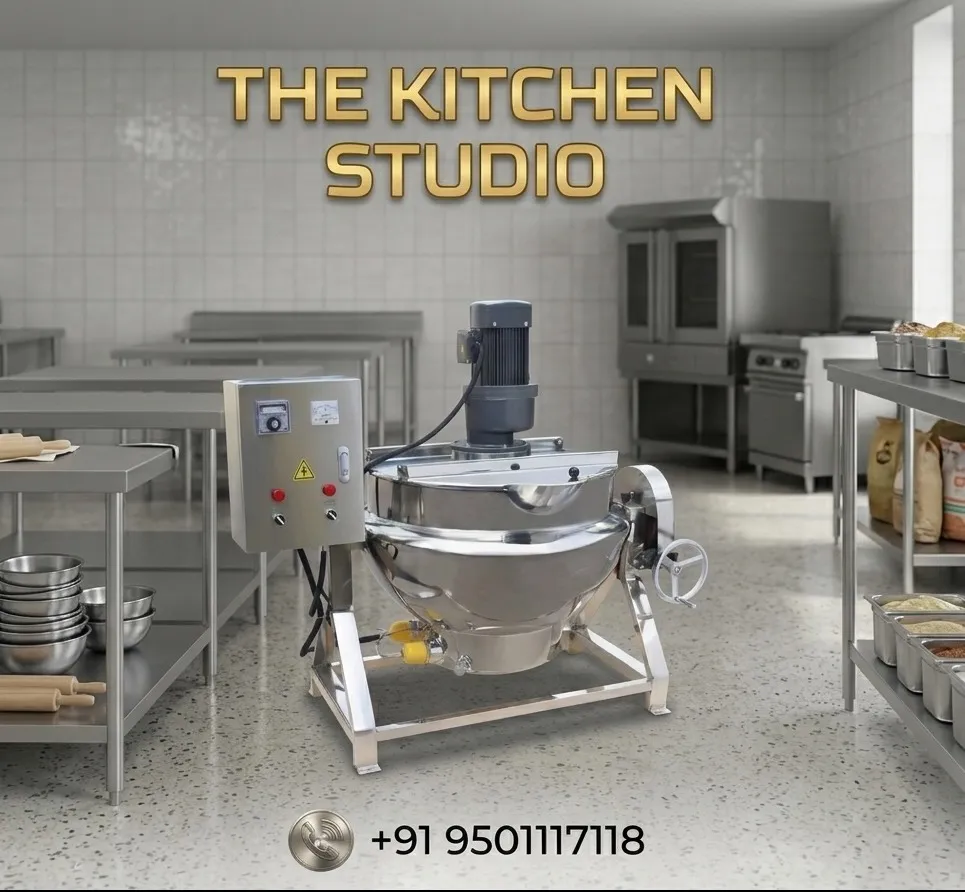
Large-scale food preparation becomes increasingly difficult when kitchens rely entirely on conventional pots for products that need prolonged cooking, stirring, or batch consistency. An Industrial Cooking Kettle can provide a more structured solution for commercial kitchens producing soups, sauces, gravies, curries, stocks, dairy preparations, and other high-volume recipes.
Before investing in one, businesses should assess production requirements carefully because kettle capacity and configuration should reflect the actual process.
Identify the Product Being Cooked
Different food products behave differently during heating.
Thin liquids, thick gravies, sauces, and products containing solids may have different requirements for heat distribution and mixing.
Operators should therefore begin by documenting:
- Product type
- Batch quantity
- Cooking duration
- Required temperature range
- Mixing needs
- Number of batches per shift
- Cleaning procedure
These details help determine whether a particular kettle configuration is suitable.
Select Capacity According to Real Production
Buying the largest available kettle does not automatically improve productivity.
An oversized unit may be inefficient when most batches are substantially smaller. An undersized kettle, meanwhile, may require too many production cycles.
Food manufacturers and high-volume kitchens in Chandigarh can benefit from calculating their average and peak batch requirements before deciding on capacity.
Future production growth can also be considered, but it should be realistic rather than speculative.
Examine Heating and Mixing Requirements
Industrial kettles can use different heating arrangements depending on their intended application.
The right configuration should provide controlled heating suitable for the food being produced.
For thicker preparations, mixing may become particularly important. An appropriate agitation system can reduce manual effort and help maintain more uniform processing.
The exact requirement depends on product viscosity and recipe characteristics.
Consider Discharge and Handling
Cooking is only one part of the production process. The finished product must also be transferred safely and efficiently to the next stage.
Operators should evaluate how the kettle empties and whether its discharge arrangement works with receiving containers, filling equipment, or downstream processing.
A poorly positioned outlet can create unnecessary manual handling.
Cleaning Should Be Part of Equipment Selection
Food equipment must be cleaned regularly, so internal accessibility is important.
Smooth surfaces, suitable drain points, accessible components, and practical cleaning procedures can reduce downtime between batches.
Businesses should understand how mixing components and other internal parts are cleaned before finalizing equipment.
Plan the Surrounding Workspace
Adequate working clearance, utilities, drainage, ventilation, and material movement should be considered before installation.
The Kitchen Studio supplies commercial kitchen equipment for businesses requiring solutions suited to their production workflow. For industrial cooking applications, discussing batch size and processing steps before equipment selection can help avoid capacity mismatches.
An industrial kettle can improve batch handling when it is selected for a defined production requirement. The most suitable equipment is not necessarily the biggest or most complex model. It is the one that matches the product, capacity, heating process, handling method, cleaning routine, and available workspace.
Keywords