

Commercial kitchen projects involve significant coordination between equipment, utilities, ventilation, workflow, hygiene, and available space. A supplier may offer an extensive catalogue, but that alone does not establish whether the company can deliver equipment appropriate for a specific operation. Businesses should evaluate a Commercial Kitchen Equipment Manufacturer on technical understanding as well as manufacturing capability.
For hotels, restaurants, caterers, cafés, institutions, and food-service businesses in Chandigarh, careful provider selection can reduce layout conflicts and unnecessary modifications later.
Begin With Relevant Project Understanding
A manufacturer should ask questions before recommending equipment.
The requirements of a restaurant kitchen differ from those of a hospital, school, hotel, bakery, industrial canteen, or banquet facility. Production volume also changes the appropriate equipment capacity.
A provider who understands the application is better positioned to recommend suitable dimensions and configurations.
Request Clear Material Specifications
Commercial kitchen equipment can look similar externally while differing considerably in construction.
Ask for information about:
- Stainless steel grade
- Material thickness
- Equipment dimensions
- Worktop construction
- Welding and finishing
- Internal components
- Electrical or gas specifications where relevant
Written specifications make it easier to compare quotations fairly.
Examine Fabrication Quality
If possible, inspect representative equipment or completed fabrication.
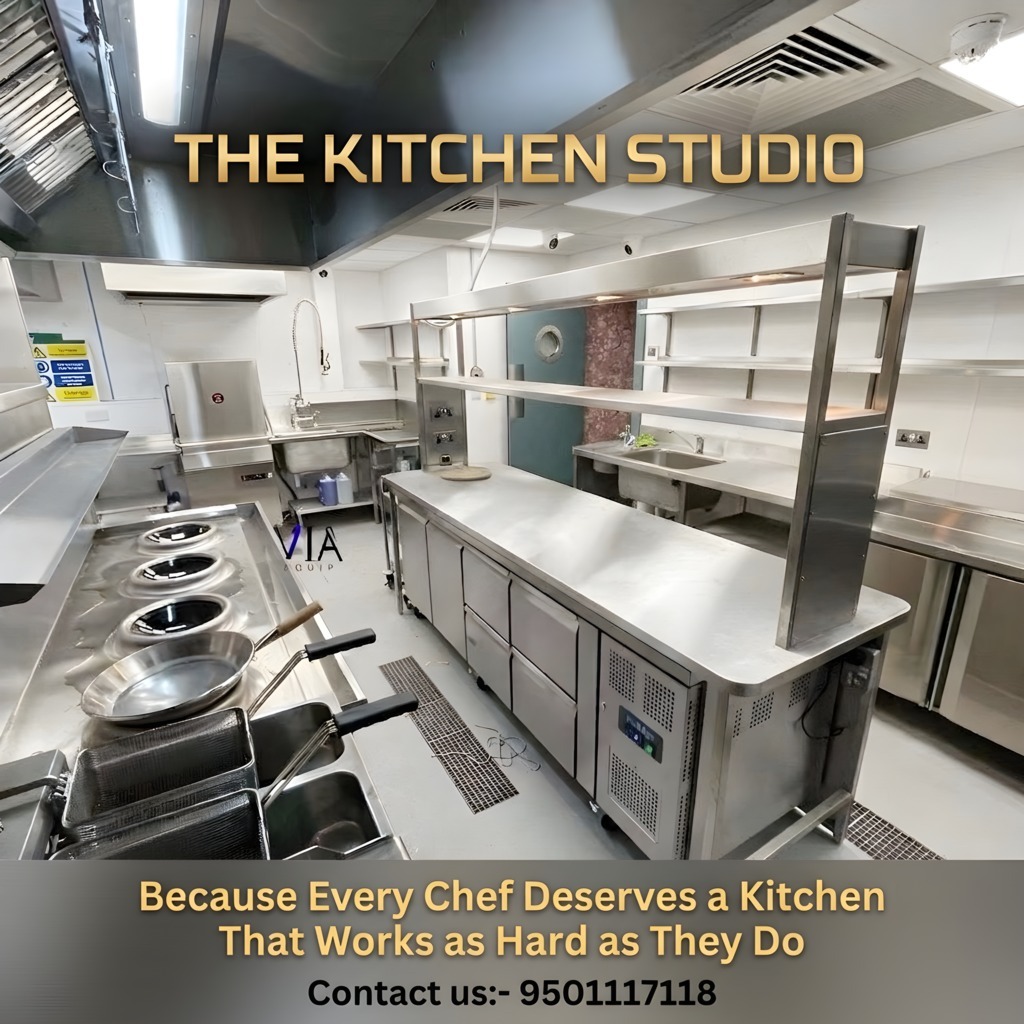
Look at joints, edges, surface finishing, stability, shutters, handles, drawers, and ease of cleaning. Work tables should be suitable for their expected loads, while sinks and wet equipment need appropriate fabrication to manage routine use.
Good fabrication should support both durability and hygiene.
Check Custom Manufacturing Capability
Many professional kitchens need equipment adapted to the site.
Custom sizes may be necessary because of columns, service shafts, restricted floor areas, existing utility positions, or specialized production processes.
A capable Commercial Kitchen Equipment Manufacturer should be able to explain what can be customized and where standard equipment would be more appropriate.
Discuss Installation and Utility Requirements
Before ordering, determine who is responsible for installation and utility connections.
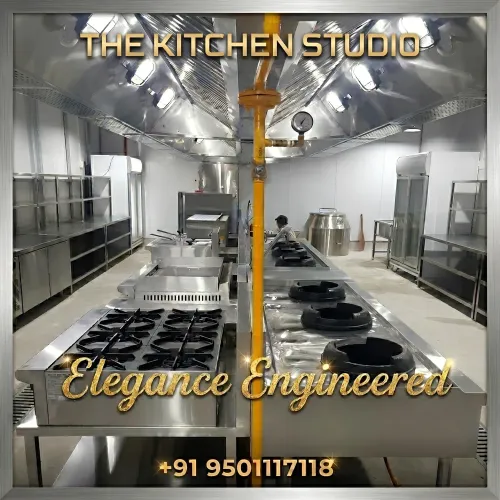
Cooking equipment may require gas or electrical services. Sinks require water and drainage. Refrigeration has power and ventilation considerations. Exhaust equipment needs suitable duct routing.
If these details are discovered only during installation, project schedules can be disrupted.
Ask About Support After Installation
Commercial equipment works under demanding conditions, so service arrangements matter.
Businesses should understand warranty coverage, maintenance requirements, spare component availability, and whom to approach if equipment requires attention.
This is particularly important for operational kitchens where equipment downtime can affect food service.
Prepare Before Requesting a Final Quote
Businesses can obtain more accurate proposals when they provide useful project information.
Before contacting a manufacturer, prepare:
- Site layout or dimensions
- Menu or food-production details
- Expected daily and peak volume
- Required equipment list, if available
- Utility information
- Target opening date
- Budget range
The Kitchen Studio serves commercial kitchen requirements in Chandigarh and can help align equipment selection with available space and operational workflow.
Price remains an important consideration, but it should be evaluated alongside material specifications, fabrication quality, customization, installation, and support.
The right manufacturer should help turn operational requirements into equipment that works effectively within the site. When businesses compare providers using measurable criteria instead of price alone, they are more likely to build a kitchen that supports reliable day-to-day operations.