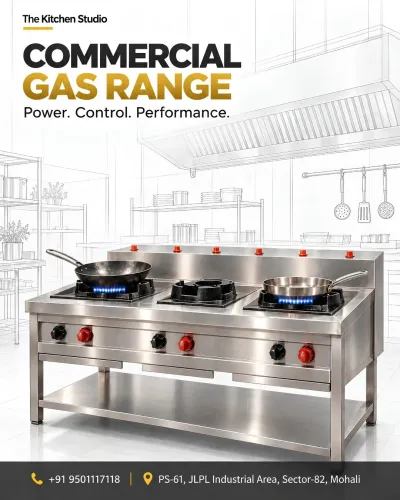
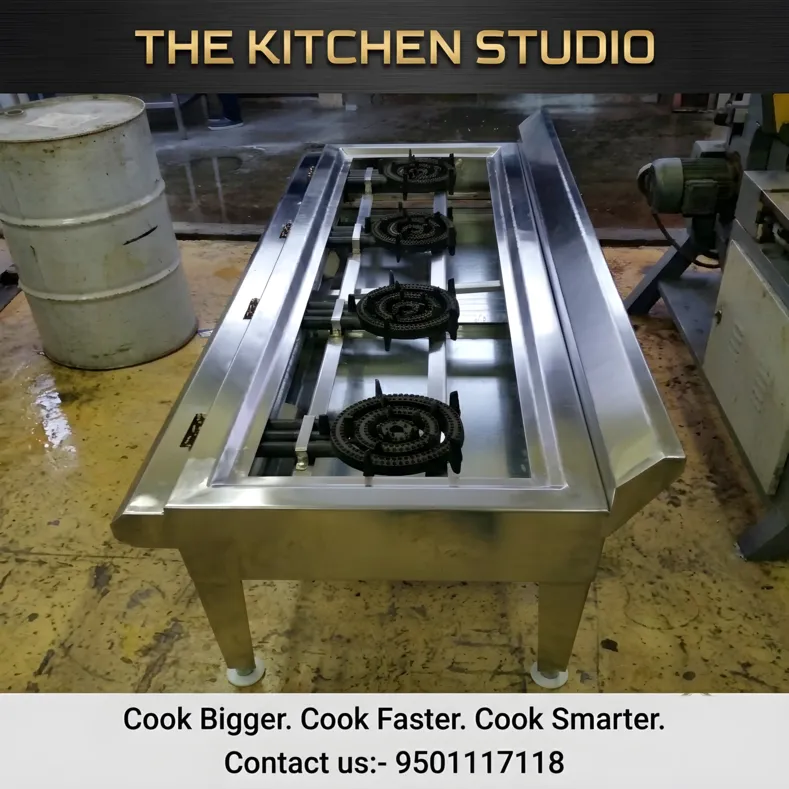
A busy commercial kitchen needs cooking equipment that can handle repeated production without disrupting workflow. A Heavy-Duty 4-Burner Commercial Gas Cooking Range is commonly considered by restaurants, hotels, catering kitchens, and institutional food facilities that prepare several dishes simultaneously.
Before purchasing one, operators should evaluate more than burner count. Construction, working height, burner arrangement, cleaning access, gas compatibility, and kitchen layout all affect long-term usefulness.
Check Whether Four Burners Match Production Needs
Four burners allow kitchen staff to operate multiple vessels at the same time, but capacity should still be matched to the menu.
A kitchen preparing gravies, sauces, stocks, and sautéed dishes simultaneously may benefit significantly from four independent cooking positions.
A smaller operation with limited production may not need the same footprint.
Examine the Frame and Working Surface
Commercial ranges experience constant movement of heavy vessels. Structural stability is therefore important.
The frame should be capable of supporting the cookware typically used in the establishment. Stainless steel surfaces can make routine cleaning easier while providing a professional finish suitable for commercial environments.
Restaurants in Chandigarh planning new kitchens should also check whether the range dimensions fit comfortably within the hot cooking line without restricting staff movement.
Consider Burner Spacing
Burners positioned too closely can make it difficult to use several large vessels simultaneously.
Adequate spacing allows handles and cookware to remain manageable while helping chefs work without unnecessary interference.
The arrangement should be evaluated using the actual vessel sizes expected in the kitchen.
Plan Gas Connections Before Installation
Gas infrastructure should be coordinated with the kitchen layout.
Connection points, shut-off access, ventilation, and equipment positioning need to be considered during planning. Installing the range first and attempting to adapt utilities later can create avoidable complications.
The exhaust system should also be appropriately positioned over the cooking line.
Cleaning Access Should Be Practical
Spills are unavoidable in high-volume cooking. Equipment that is difficult to clean around and beneath can increase maintenance effort.
Removable components, accessible surfaces, and practical clearance can make daily cleaning more manageable.
Operators should ask how burner components are serviced and whether routine maintenance requires major disassembly.
Think Beyond the Individual Machine
A cooking range performs best when its surrounding workstations are properly planned.
Preparation tables should be nearby, ingredients should be accessible, and cooked food should move logically toward plating or holding areas.
The Kitchen Studio supplies commercial kitchen equipment and develops kitchen setups around operational requirements. For high-volume cooking equipment, matching capacity to menu production is particularly important because larger equipment is useful only when the surrounding workflow can support it.
Before finalizing a four-burner range, operators should assess menu demand, vessel dimensions, kitchen space, ventilation, utilities, cleaning procedures, and expected service volume.
A heavy-duty commercial range is ultimately a production tool. Choosing one according to real kitchen operations can improve cooking flow while reducing the compromises that often appear when equipment is selected primarily by size or price.
Keywords