A premium kitchen loses its advantage when deep shelves hide ingredients, heavy cookware sits above shoulder height, or a pull-out cannot open because the aisle is too narrow. By matching each storage mechanism to a cooking task, calculating usable capacity, and checking hardware, clearances and stock controls, you can design a kitchen that is faster to use and easier to maintain.
Key takeaways
- Keep dry goods visible and reachable without moving other supplies.
- Measure usable internal volume, not just external cabinet dimensions.
- Separate food, chemicals and heavy cookware into dedicated storage zones.
- Choose hardware rated for the actual load and daily opening cycles.
Match Each Storage Mechanism to a Cooking Task
Assign each unit to the task it makes quickest and safest, not merely to an empty cabinet. Dry goods need visible, reachable shelves; cookware needs load-bearing storage; small tools need separation at hand height.
| Mechanism | Best contents | Cooking task it supports |
|---|---|---|
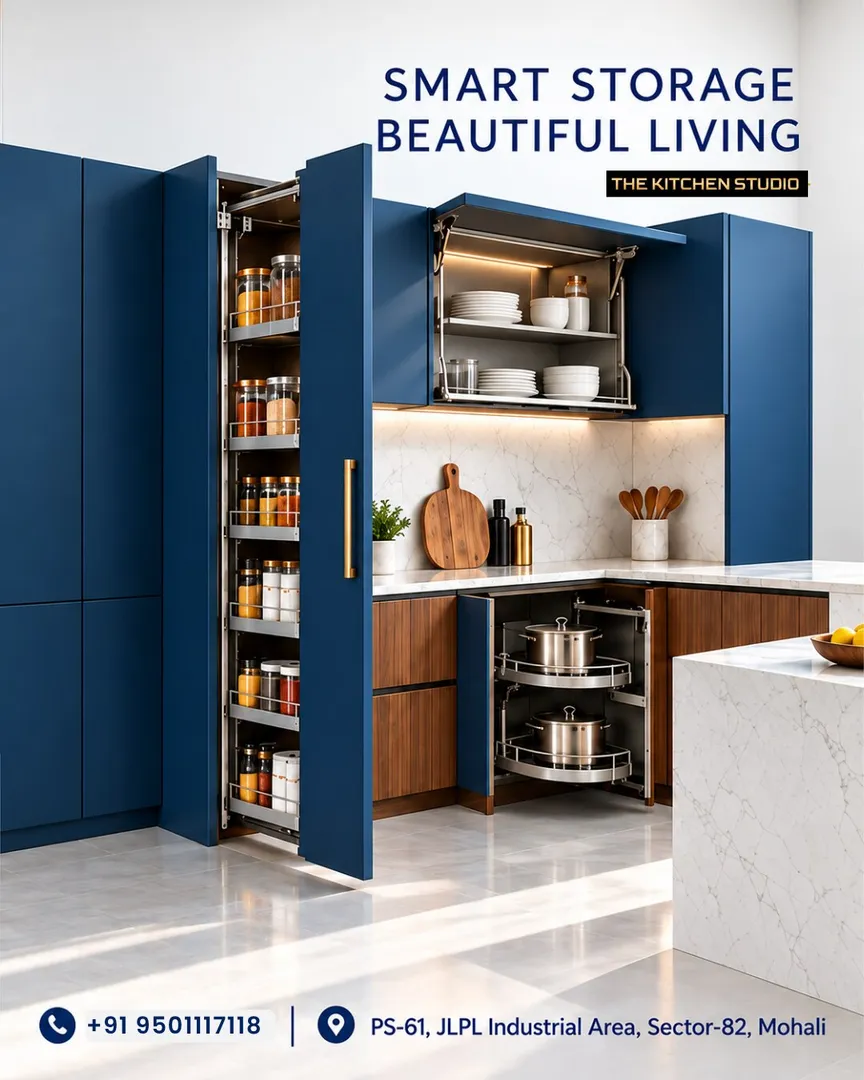
| Pull-out pantry towers | Flour, rice, pasta, tins and packaged dry goods | Bring narrow product groups into view without reaching behind a fixed shelf |
| Tall larder cabinets | Bulk dry goods, cereal boxes and reserve stock | Store varied package heights in one full-height zone |
| Tandem drawers | Pots, pans, Dutch ovens and heavy cookware | Support weight low down and allow direct lifting from above |
| Corner carousels | Mixing bowls, pans and cookware in a blind corner | Rotate otherwise inaccessible items into the opening |
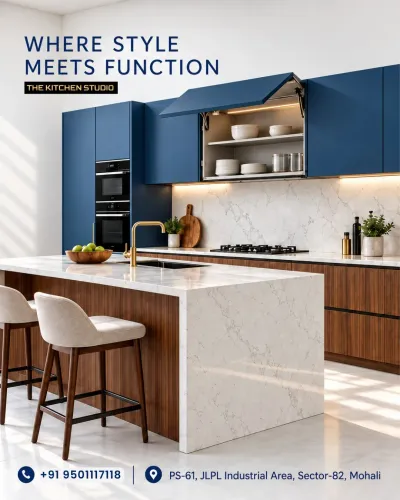
| Lift-up cabinets | Plates, glasses and lightweight servingware | Keep frequently used service items above the worktop without overhead doors swinging into you |
| Internal drawer organisers | Cutlery, peelers, whisks and measuring tools | Separate small implements so one item does not bury another |
| Bottle pull-outs | Oils, vinegars, sauces and tall bottles | Keep narrow containers upright and visible beside the preparation zone |
| Appliance garages | Mixers, toasters and coffee equipment | Hide countertop equipment while preserving quick access |
Accessibility matters more than the compartment count. A full-extension shelf that puts flour or spices in view supports faster service than a deeper fixed shelf with an unreachable rear zone. Keep fixed locations and front-facing labels so replenishment follows first-expired, first-out rotation.
Calculate Usable Capacity Before Fixing Cabinet Dimensions
Plan pantry capacity from what your household holds between shopping trips, not from the cabinet’s advertised litres. A two-person household shopping weekly needs a different cabinet than a family of six buying monthly, while bulk rice, flour or canned goods can consume more space than frequent fresh-food purchases.
1. Record each product pack held between trips, including its width, depth and height. Multiply those dimensions by the number of packs, grouping identical formats; add reserve space for seasonal supplies and bulk buying.
2. Choose the storage format against reachable volume, not gross volume. Full-height pull-outs expose every shelf but lose space to runners and side clearances; fixed shelves offer cheaper, denser storage but create an uninspected rear zone; deep drawers provide strong access for heavy goods but consume more cabinet space.
| Option | Strength | Cost or constraint |
|---|---|---|
| Full-height pull-out | Best visibility and reach | Higher hardware cost; verify loaded load rating |
| Fixed shelves | Lowest cabinet-space cost | Rear items become difficult to inspect |
| Deep drawers | High access and heavy-load potential | Requires more front clearance and footprint |
3. Confirm cabinet width, cabinet depth and cabinet height against pack sizes, shelf pitch and hardware. A 500–600 mm cabinet depth suits many pantry layouts, but deeper units demand longer extension travel and increase rear-access problems.
4. Draw the moving parts at full extension. Keep 900–1200 mm working aisles, door and drawer clearances, hinge-side access and fillers at walls or corners; check that adjacent doors, appliances and handles do not block the pull-out.
5. Specify a rigid, level, correctly anchored carcass for tall pull-outs. Nominal cabinet volume is not usable capacity after runners, shelf spacing and side clearances are deducted.
Zone Food, Chemicals and Heavy Items for Safer Access
Keep dry goods, spices, oils, cookware, cleaning chemicals and small appliances in separate zones: store chemicals outside food-storage cabinets, and keep oils away from ovens, hobs and other heat-producing equipment. Place daily-use items between knee and shoulder height for ergonomic storage.
Reserve high lift-up cabinets for lightweight goods, and store heavy pots in low tandem drawers rather than overhead units.
Apply food-service food contamination prevention rules at home. Maintain 150 mm floor clearance by keeping stored food at least 150 mm above the floor, using a sealed, washable plinth or raised bottom shelf. Stainless steel alone does not make storage hygienic; avoid exposed threaded fasteners, unsealed hollow sections, narrow gaps and inaccessible drawer cavities.
A pantry beside an oven, dishwasher or steam source needs appliance heat separation and moisture separation. Heat and humidity degrade packaging, cake powders and corrode joints, so use cleanable surfaces and ventilation that does not blow unfiltered air directly over food packaging.
- Put flour, grains and packaged goods in accessible pantry shelves or pull-outs.
- Keep spices and oils near preparation areas, but away from direct heat and steam.
- Place cleaning chemicals in a separate, labelled cabinet with no food, utensils or packaging.
- Check that every shelf, plinth and drawer cavity can be reached, wiped and inspected.
Specify Hardware That Can Carry the Load and Survive Daily Use
Premium cabinet space earns its place when the mechanism remains stable, accessible and serviceable after years of loading. Specify full-extension slides so you can inspect the rear of every shelf, soft-close runners for controlled returns, adjustable shelves for changing pack sizes, and anti-slip liners that stop jars shifting during movement.
| Hardware detail | Specify | Failure avoided |
|---|---|---|
| Full-extension slides | Rated load per shelf, not drawer capacity alone | Hidden stock and runner distortion |
| Soft-close runners | Manufacturer, cycle rating and replacement availability | Slamming, loose fixings and costly repairs |
| Adjustable shelves | Shelf pitch, support-pin size and point-load rating | Sagging beneath one appliance or pot |
| Anti-slip liners | Removable, washable material | Sliding containers and trapped spills |
A tall pull-out needs a rigid, level, correctly anchored carcass. Its centre of gravity moves outward when extended, increasing overturning and racking forces; check both uniformly distributed load and point load, not just the headline load rating.
Corrosion resistance also depends on exposure: 304 stainless suits many indoor pantries, while 316 offers greater chloride resistance near salt, brine or bleach. Neither replaces rinsing and drying.
Stainless construction alone does not prove hygienic design. Choose smooth, accessible surfaces, sealed hollow sections and cleanable geometry without exposed threaded fasteners or narrow dirt traps; NSF/ANSI 2 is a useful construction reference.
When comparing a fabricated kitchen from The Kitchen Studio with another supplier, ask for:
- Hardware manufacturer and finish specification
- Installation tolerances and service access
- Rated load per shelf for both load types
- Replacement-part policy and written warranty terms
Related products
 | Modern Stainless Steel Modular Kitchen Modern Stainless Steel Modular Kitchen The modern stainless steel modular kitchen is designed to combine contemporary aesthetics with superior durability and hygiene. View product → |
 | SS Modular Kitchen The residential stainless steel modular kitchen is thoughtfully designed to meet the needs of contemporary homes. View product → |
Make Smart Inventory Controls Useful During Real Kitchen Operations
Assign every SKU a fixed location, then put a front-facing label on the bin or shelf. Use FEFO rotation: move the product with the earliest expiry to the front, rather than relying on FIFO. This makes date control visible and prevents a quantity sensor from hiding obsolete stock.
| System | Strength | Failure point |
|---|---|---|
| Barcode pantry system | Low-cost, visible item identification | Requires an undamaged label and a scan at every movement |
| RFID pantry system | Identifies multiple tagged items without line-of-sight | Costs more and can struggle around liquids, metal containers and dense stacks |
| Weight sensing | Estimates quantity without scanning each item | Does not verify lot number, expiry date or the item’s storage location |
Weight shelves need tare calibration, a recorded empty-shelf value and product-specific unit weights. Check exceptions after loading, vibration, shelf deflection, impacts, returns to the wrong location and unexplained quantity changes. A reading of “12 units” is not proof that all 12 units belong to the correct lot or remain within date.
Set low-stock alerts against the operating constraints that determine a real replenishment decision:
- Pack size and units consumed per service period
- Supplier lead time and delivery days
- Minimum order quantity
- Required service level and the risk of running out
Use alerts as an exception list, not automatic purchasing. Keep manual labels, visible minimum and maximum levels, and a local override. The pantry must remain usable during power, network or cloud-service outages; otherwise the technology becomes the failure point.
Frequently asked questions
How should you match storage mechanisms to cooking tasks?
Use visible pull-out shelves for dry goods, deep drawers or reinforced drawers for cookware, and divided drawers for small tools used at the worktop.
How do you calculate usable cabinet capacity before fixing dimensions?
Measure the internal width, depth and height after subtracting panels, hinges, runners and clearance. Calculate capacity from the remaining space rather than the cabinet’s outside dimensions.
How should food, chemicals and heavy items be zoned?
Store food in clean, dry pantry compartments; keep detergents and chemicals in a separate, labelled cabinet; place heavy cookware in low, load-rated drawers or shelves.
What hardware should a premium kitchen storage unit use?
Specify runners, hinges and pull-out frames with a load rating above the stored weight, soft-close action and dimensions suited to the cabinet opening.
How can inventory controls help during real kitchen operations?
Use clear labels, fixed locations, first-in-first-out rotation and stock levels that staff can check without unloading the pantry.
Related products
 | Residential Stainless Steel Modular Kitchen Residential Stainless Steel Modular Kitchen The residential stainless steel modular kitchen is thoughtfully designed to meet the needs of contemporary homes. View product → |
 | Stainless Steel Kitchen The residential stainless steel modular kitchen is thoughtfully designed to meet the needs of contemporary homes. View product → |
 | Ss Island Modular Kitchen View product → |